Disclosure: As an Amazon Associate I earn from qualifying purchases.
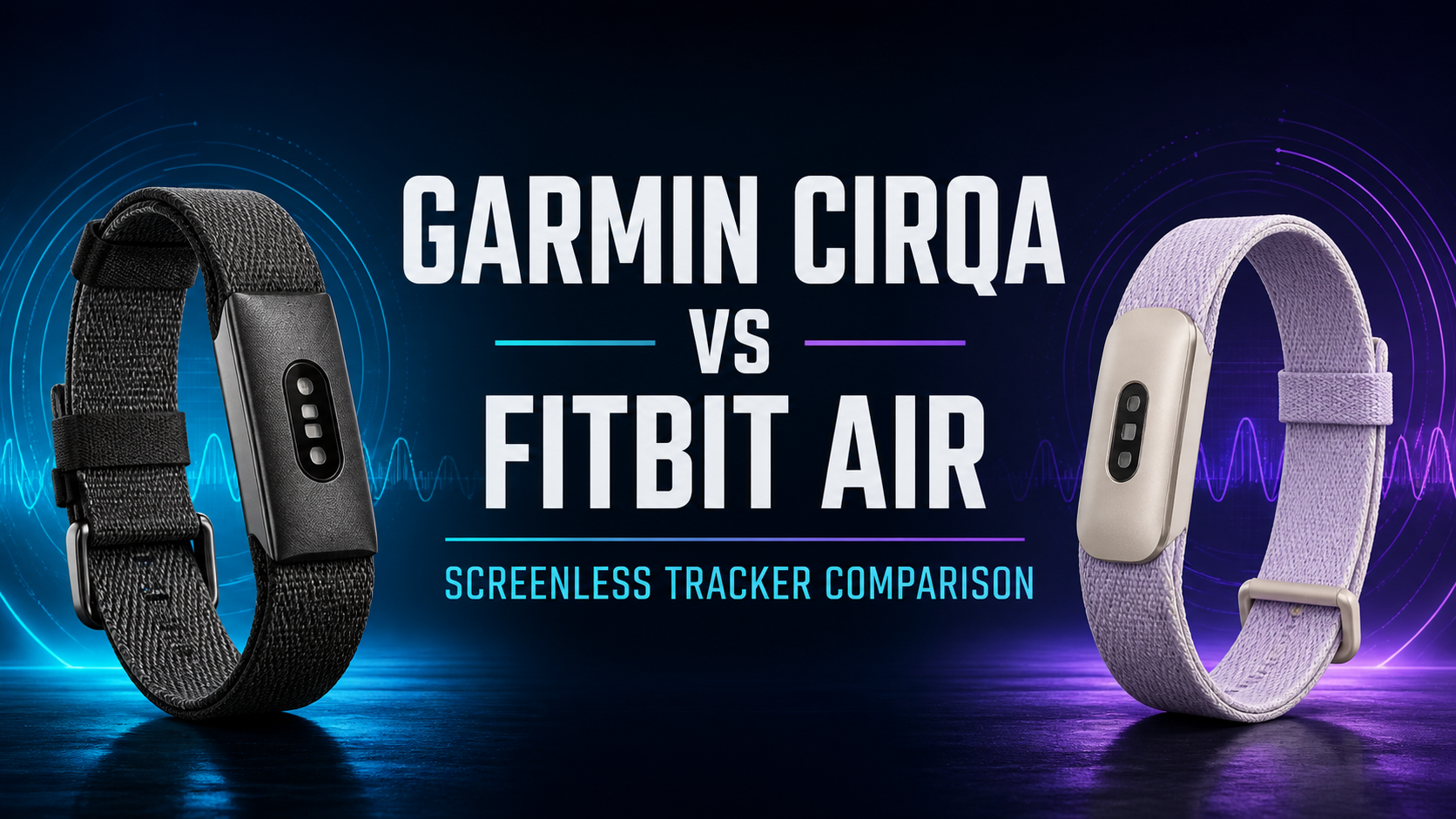
The short answer: buy the Garmin CIRQA if you want deeper training tools, up to 10 days of battery life, and useful core features without a required subscription. Buy the Fitbit Air if you want a lighter, simpler screenless tracker at roughly half the official price.
This Garmin CIRQA vs Fitbit Air comparison is based on official Google and Garmin specifications, current U.S. product information, and Amazon.com ranking data checked on August 30, 2026. It is not presented as a hands-on accuracy test.
This article contains affiliate links. If you buy through one of these links, SEFP Journal may receive a commission at no additional cost to you.
- Quick verdict
- Why these two new trackers matter on Amazon.com
- Garmin CIRQA vs Fitbit Air specifications
- Subscription: does Garmin CIRQA or Fitbit Air require a monthly fee?
- Price and value: is Garmin CIRQA worth twice as much?
- Battery life and charging
- Sleep and recovery tracking
- Fitness and workout tracking
- Sensors and health features
- GPS and phone compatibility
- Comfort, size, and everyday wear
- Garmin Connect vs Google Health
- Who should buy Garmin CIRQA?
- Who should buy Fitbit Air?
- Final verdict
- Frequently asked questions
- Is Garmin CIRQA better than Fitbit Air?
- Does Garmin CIRQA require a subscription?
- Does Fitbit Air require Google Health Premium?
- Which has better battery life?
- Do Garmin CIRQA and Fitbit Air have GPS?
- Can you swim with Garmin CIRQA or Fitbit Air?
- Which is better for sleep tracking?
- Is Garmin CIRQA worth the extra 0?
- Sources and verification date
Quick verdict
- Best overall for serious fitness tracking: Garmin CIRQA. It offers up to 10 days of battery life, 80+ activity profiles, Body Battery, training readiness, training status, recovery time, VO2 max estimates, and connected GPS. Garmin says its core health and fitness features do not require a subscription.
- Best value and best for all-day comfort: Fitbit Air. Its official starting price is $99.99, the tracker itself weighs only 5.2 grams, and it provides heart-rate, sleep, SpO2, skin-temperature, and activity tracking with up to seven days of battery life.
- Best for people who dislike monthly fees: Garmin CIRQA. Fitbit Air can perform core tracking without Google Health Premium, but its personalized AI coaching and some advanced experiences require the paid plan. Garmin Connect+ is optional for selected extras rather than required for the core CIRQA experience.
- Best for casual wellness and sleep tracking: Fitbit Air. It is smaller, lighter, and considerably cheaper, making it easier to justify as a first screenless wearable.
Why these two new trackers matter on Amazon.com
Screenless fitness bands have become one of the most active wearable categories in 2026. They collect health and activity data without putting notifications, apps, or another glowing display on your wrist.
On August 30, 2026, the Fitbit Air Special Edition ranked No. 4 and the Garmin CIRQA ranked No. 10 in Amazon.com’s Hot New Releases for Wearable Technology. Amazon rankings change frequently, but both products were among the category’s strongest new-release sellers when this article was verified.
The comparison is especially relevant because their official U.S. prices are far apart. Google launched the standard Fitbit Air at $99.99, while Garmin announced a $199.99 suggested retail price for CIRQA. The real question is whether Garmin’s extra training features and longer battery life are worth approximately twice the price.



Garmin CIRQA vs Fitbit Air specifications
| Feature | Garmin CIRQA | Google Fitbit Air |
|---|---|---|
| Product type | Screenless health and fitness band | Screenless health and activity tracker |
| Official U.S. launch price | $199.99 MSRP | From $99.99; Special Edition $129 |
| Battery life | Up to 10 days | Up to 7 days |
| Fast charging | Not specified on the official page | About 1 day of use from 5 minutes |
| Full charging time | Not specified on the official page | About 90 minutes |
| Water rating | 5 ATM | 5 ATM |
| Built-in GPS | No | No |
| Phone-connected GPS | Yes | Yes |
| Heart-rate tracking | Yes | Yes |
| SpO2 / blood-oxygen wellness | Yes, availability varies by country | Yes, availability varies by country |
| Skin-temperature tracking | Yes | Yes |
| Sleep tracking | Sleep score, coaching, circadian insights | Sleep tracking and app-based insights |
| Activity support | 80+ activities plus automatic detection | Automatic activity and general fitness tracking |
| Training tools | Training readiness, training status, recovery time, VO2 max, Garmin Coach support | Personalized AI coaching through Google Health Premium |
| App | Garmin Connect | Google Health |
| Phone requirements | Compatible smartphone and Garmin Connect | Android 11+ or iOS 16.4+ |
| Core subscription requirement | No | No, but AI coaching and some features require Google Health Premium |
| Weight | Varies by band and size; Garmin does not publish one simple total in the cited manual | 5.2 g tracker only; 12 g with standard band |
| Wrist sizing | S/M and L/XL bands | Standard band fits 130-210 mm wrists |
Specifications and availability can vary by region. Features such as Pulse Ox are wellness tools, not medical diagnostic devices.
Subscription: does Garmin CIRQA or Fitbit Air require a monthly fee?
This is the most important difference for many buyers.
Garmin CIRQA subscription requirements
Garmin explicitly markets CIRQA as a tracker that works with Garmin Connect with no subscription required. Core features include heart-rate monitoring, Body Battery, stress tracking, sleep score, sleep coaching, training readiness, training status, activity tracking, and connected GPS.
Garmin Connect+ is still offered for selected extras. Garmin’s product page notes that some guided workouts, live activity graphs, voice-guided meditation, wheelchair workouts, and Garmin Coach plans may require Connect+. The device is therefore not completely free of optional paid services, but the core CIRQA value proposition does not depend on a subscription.
Fitbit Air subscription requirements
Fitbit Air works with the Google Health app and provides core activity, heart-rate, and sleep tracking without requiring Google Health Premium. However, Google’s personalized AI health coach and some premium experiences require a subscription. Google includes a three-month Health Premium trial with a new Fitbit Air purchase.
If you only want daily metrics, both products can be used without an ongoing fee. If you want AI coaching, Fitbit Air’s long-term cost can rise after the included trial.
Price and value: is Garmin CIRQA worth twice as much?
At official launch pricing, Fitbit Air starts at $99.99 and Garmin CIRQA costs $199.99. That $100 gap is large enough to change the recommendation.
Fitbit Air gives you the essential screenless-tracker experience: continuous heart rate, sleep data, activity tracking, SpO2 wellness data, skin-temperature trends, phone-connected GPS, 5 ATM water resistance, and a week of battery life. For a casual buyer, that is a strong feature set for the money.
Garmin CIRQA justifies its higher price with a broader fitness platform. Its advantage is not one extra sensor. It is the combination of 80+ activity profiles, training readiness, training status, recovery time, VO2 max estimates, Body Battery, automatic activity detection that can adapt after confirmation, heart-rate broadcasting to compatible Garmin devices, and a longer 10-day battery claim.
The Garmin is worth the premium if you will actually use those training and recovery tools. If you mainly want sleep, steps, heart rate, and general wellness trends, Fitbit Air is the more rational purchase.
Battery life and charging
Garmin claims up to 10 days of battery life for CIRQA. Google claims up to seven days for Fitbit Air. Both figures are maximum estimates, and actual runtime depends on sensor use, settings, activity tracking, and environmental conditions.
Fitbit Air has the clearer charging specification. Google states that a full charge takes about 90 minutes and five minutes of charging can provide up to one day of battery life under its stated test conditions.
Garmin’s extra three days can matter for sleep tracking. A wearable cannot record sleep or recovery data while it is sitting on a charger, so fewer charging sessions reduce gaps in the data. Fitbit Air’s fast-charge feature partly offsets its shorter maximum runtime.
Battery winner: Garmin CIRQA for endurance; Fitbit Air for documented fast charging.
Sleep and recovery tracking
Both bands are designed to be worn overnight without a screen lighting up the bedroom.
Garmin CIRQA provides a sleep score, personalized sleep coaching, breathing variations, circadian-rhythm guidance, Body Battery, and training readiness. These metrics are useful when sleep data is part of a broader training plan. Garmin’s longer battery life also makes continuous overnight wear easier.
Fitbit Air focuses on lightweight, unobtrusive monitoring. Google lists an optical heart-rate sensor, accelerometer and gyroscope, red and infrared sensors for blood-oxygen wellness, and a temperature sensor for skin-temperature variation. The standard band and tracker weigh about 12 grams together, which is unusually light for a 24/7 wearable.
Fitbit Air is the better fit for someone who wants simple sleep and wellness trends. Garmin CIRQA is better when sleep needs to inform training readiness and recovery decisions.
Fitness and workout tracking
Garmin is the clear winner for structured exercise.
CIRQA supports more than 80 activity types through Garmin Connect. A favorite activity can be started from the device’s physical button, and outdoor activities can use the paired phone’s GPS for distance and pace. Garmin also offers training readiness, training status, workout benefit, recovery time, intensity minutes, fitness age, and VO2 max estimates.
Fitbit Air is aimed more at daily activity and accessible wellness. It can monitor activity, heart rate, sleep, and general health trends, and it can use a phone for GPS. Google Health Premium adds personalized coaching powered by Gemini, but Fitbit Air does not match Garmin’s native training ecosystem or its range of sport-specific tools.
For walking, general gym sessions, sleep, and daily health tracking, Fitbit Air is sufficient. For running, cycling, structured training, recovery management, or an existing Garmin setup, CIRQA is the stronger choice.
Sensors and health features
The two devices cover similar wellness-sensor categories, but their software interprets the data differently.
Fitbit Air officially includes:
- Optical heart-rate monitoring
- A three-axis accelerometer and gyroscope
- Red and infrared sensors for SpO2 wellness monitoring
- A device temperature sensor for skin-temperature variation
- A vibration motor
Garmin CIRQA offers wrist-based heart rate, Pulse Ox, skin-temperature tracking, stress tracking, women’s health tools, Body Battery, respiration insights, and sleep metrics. Garmin also supports heart-rate broadcasting to compatible Garmin devices.
Neither product should be treated as a medical device. Sensor availability and wellness features can vary by country, and readings can be affected by fit, movement, physiology, and environment.
GPS and phone compatibility
Neither Garmin CIRQA nor Fitbit Air has built-in GPS. Both can use a compatible phone’s GPS for outdoor route, distance, and pace information.
This is important if you run without a phone. In that situation, neither band replaces a GPS running watch. Garmin’s training software is more advanced, but CIRQA still needs the paired phone for mapped outdoor activities.
Google specifies Android 11 or later and iOS 16.4 or later for Fitbit Air. It requires a Google account, the Google Health app, Bluetooth LE, an internet connection, and location permission for setup and synchronization.
Garmin CIRQA works through Garmin Connect on a compatible smartphone. It is especially attractive to people who already own a Garmin Edge cycling computer or another Garmin device because it can broadcast heart rate into that ecosystem.
Comfort, size, and everyday wear
Fitbit Air has the more compelling published weight specification. The tracker weighs 5.2 grams without the band and about 12 grams with the standard band. The tracker body measures 34.9 x 17 x 8.3 mm, and the standard textile band fits wrists from 130 to 210 mm.
Garmin offers CIRQA in S/M and L/XL sizes and uses a soft fabric band designed for day-and-night wear. Garmin’s official manual lists the wrist-band lengths, but it does not provide one simple all-in total weight that can be compared fairly with Google’s 12-gram figure.
Both trackers have a 5 ATM water rating, meaning they are designed to withstand pressure equivalent to a depth of 50 meters under the manufacturers’ stated conditions. Water resistance can decline with age, wear, damage, or repair.
Fitbit Air is likely the safer choice for buyers who prioritize minimum bulk. Garmin CIRQA is the better choice when software depth matters more than the lowest possible weight.
Garmin Connect vs Google Health
The app ecosystem may matter more than the band itself.
Garmin Connect is built around fitness history, training load, recovery, activity profiles, performance trends, and compatibility with other Garmin hardware. CIRQA makes sense as a discreet entry point into that established ecosystem.
Google Health emphasizes health summaries, accessible wellness tracking, and optional Gemini-powered coaching. Fitbit Air is designed to be simpler and less intimidating, especially for people who do not want a sports watch.
Choose the ecosystem whose data you will actually review. A cheaper tracker provides little value if you dislike opening its app, while an expensive tracker is wasted if you never use its training insights.
Who should buy Garmin CIRQA?
Buy Garmin CIRQA if most of the following are true:
- You want detailed fitness and recovery metrics without a required core subscription
- You will use 80+ activity profiles or structured training tools
- Up to 10 days of battery life matters
- You want Body Battery, training readiness, training status, recovery time, or VO2 max estimates
- You already use Garmin Connect, a Garmin Edge, or another Garmin device
- You are comfortable paying about $100 more than the standard Fitbit Air launch price
Who should buy Fitbit Air?
Buy Fitbit Air if most of the following are true:
- You want a simple screenless tracker for sleep, steps, heart rate, and wellness trends
- You prefer a very light tracker for 24/7 wear
- You want to spend around $100 rather than $200 at official launch pricing
- Seven days of battery life is enough
- You use Android or iPhone and prefer Google’s health ecosystem
- You are interested in optional AI coaching and understand that Google Health Premium may add a recurring cost
Final verdict
Garmin CIRQA is the better fitness product, while Fitbit Air is the better value product.
Garmin wins on battery life, activity depth, training readiness, recovery insights, and ecosystem integration. It is the better choice for active users who want a screenless alternative to a Garmin watch and plan to use the data seriously.
Fitbit Air costs roughly half as much at official launch pricing, weighs very little, and still covers the health and sleep features most casual buyers want. It is the easier recommendation for first-time screenless-tracker buyers and anyone who does not need Garmin’s advanced training layer.
If you are still deciding between a band and a smart ring, see our Oura Ring 4 vs Samsung Galaxy Ring comparison.
Frequently asked questions
Is Garmin CIRQA better than Fitbit Air?
Garmin CIRQA is better for structured exercise, training readiness, recovery analysis, activity profiles, and battery life. Fitbit Air is better for affordability, low weight, and simple daily health and sleep tracking.
Does Garmin CIRQA require a subscription?
No subscription is required for CIRQA’s core health and fitness features. Some optional Garmin Connect+ experiences, including selected guided or live features, may require a paid plan.
Does Fitbit Air require Google Health Premium?
Core tracking does not require Google Health Premium, but personalized AI coaching and some premium experiences do. Google includes a three-month trial with a new Fitbit Air purchase.
Which has better battery life?
Garmin claims up to 10 days for CIRQA, while Google claims up to seven days for Fitbit Air. Actual runtime varies with settings and use.
Do Garmin CIRQA and Fitbit Air have GPS?
Neither has built-in GPS. Both can use a compatible paired phone’s GPS for outdoor activity tracking.
Can you swim with Garmin CIRQA or Fitbit Air?
Both have a 5 ATM water rating. That rating is not the same as permanent waterproofing, and owners should follow each manufacturer’s water-use and care guidance.
Which is better for sleep tracking?
Fitbit Air is attractive for lightweight, simple overnight tracking. Garmin CIRQA is better if you want sleep data connected to Body Battery, training readiness, recovery, and a broader training plan.
Is Garmin CIRQA worth the extra 0?
It is worth the premium for buyers who will use its training tools, longer battery life, activity profiles, and Garmin ecosystem. For basic wellness and sleep tracking, Fitbit Air offers better value.
Sources and verification date
Specifications and availability were checked on August 30, 2026. Primary sources:
- Google Fitbit Air technical specifications
- Google’s Fitbit Air launch announcement
- Garmin CIRQA official product page
- Garmin CIRQA official specifications manual
- Garmin CIRQA launch announcement
- Amazon.com Hot New Releases in Wearable Technology
Amazon rankings, prices, sellers, colors, and stock can change at any time. Check the product page for the current offer before buying.